Bjørnstad
The CallerBjørnstad is the residential setting around Henry Beskow’s home on Rolandsgata, where Johnny Beskow visits his grandfather and repeatedly passes a girl who watches the street. Its defining landmarks are the cul-de-sac’s last, oldest house and a small rocky knoll nearby: together, they establish a compact neighborhood stage for Johnny’s visits and his mounting fixation on the girl.
Rolandsgata and Henry’s House
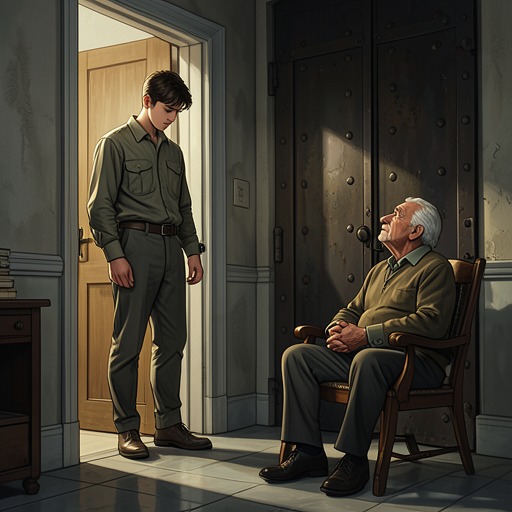
Henry lives at the very end of Rolandsgata, in the street’s oldest house. His home anchors Johnny’s visits to Bjørnstad: after riding along the street, Johnny parks outside, goes in, and finds his grandfather seated near the window, his legs supported because of his poor mobility. The house is therefore not just an address at the end of the road, but the place where Johnny’s relationship with Henry is enacted in ordinary, repeated visits.
The Knoll and the Street
Near Henry’s house stands a small rocky knoll from which a girl often watches people passing. She treats the street as her territory and taunts Johnny as he rides by; her fiery red plait makes her conspicuous to him. On a later visit, she is on a blue Nakamura bicycle rather than on the knoll, wearing a Hauger School Band pullover. These details locate the conflict in recognizable features of the neighborhood: the road Johnny rides, the elevated perch from which the girl observes it, and the route to his grandfather’s door.
A Setting for Escalation
Bjørnstad links Johnny’s separate activities through his repeated journeys to Henry’s home. After riding around residential streets and visiting the shopping centre in Kirkeby to buy a gorilla mask and a white plush bunny, he turns into Rolandsgata and encounters the girl again. He ignores her insult, but privately resolves to confront her later. The neighborhood thus becomes the setting where an everyday visit and a deliberately deferred threat occupy the same route; the tension grows through recurrence rather than through any change to the place itself.